
What Erosion Control Means on a North Carolina Construction Site
Erosion control on a North Carolina construction site means actively managing exposed soil to prevent sediment and mud from polluting local waterways. This is also essential to prevent it from washing into properties. During erosion control, barriers are installed, and soil covers are applied.
North Carolina can be susceptible to erosion risk due to high rainfall, red clay, and large-graded subdivisions that can create a real runoff risk. Erosion control is not to be confused with sediment control. Erosion control is the first step, as it aims to keep dirt in place. Sediment control serves as a backup to capture loose dirt that moves.
When you choose Wynn Site Development, we strictly adhere to erosion control standards. We prioritize ecosystem preservation by strictly adhering to erosion control standards and strategically installing additional measures to manage runoff during significant weather events.
NC Erosion Control Requirements: What the Law Says
At Wynn Site Development, we follow all North Carolina control requirements. The North Carolina Sedimentation Pollution Control Act (SPCA) of 1973 is the legal standard against which many of these requirements are measured. The SPCA gives developers flexibility in choosing their methods, but strictly prohibits visible mud and sediment from leaving a construction site or entering state waters.
The One-Acre Threshold & Permit Requirements
If a project disturbs one acre or more of land, the financially responsible party must submit a formal Erosion and Sedimentation Control (E&SC) Plan. This plan must be submitted and approved at least 30 days before any land-disturbing activity begins.

Mandatory Standards
The SPCA and the NC Administrative Code have clear operational requirements for active sites. This includes establishing a buffer zone along any watercourse or lake to confine visible sediment to the 25% of the buffer strip nearest the land disturbance.
If the project is near designated trout waters, a minimum 25-foot undisturbed buffer is legally required.
Legal Enforcement and Penalties
North Carolina treats sedimentation violations as serious environmental infractions. Failure to secure an approved plan or follow the rules can result in fines of up to $5,000 a day per violation. This is why you want an experienced company like Wynn Site Development on hand to handle all your erosion control needs.
Erosion Control Across North Carolina's Regions

The Mountains
In the Mountain region, the primary challenges are shallow bedrock and highly sensitive, cold-water trout streams. The challenge in these areas is gravity. High-velocity stormwater runoff on steep mountain slopes can instantly wash away standard silt fences and other erosion-prevention measures.
The Piedmont
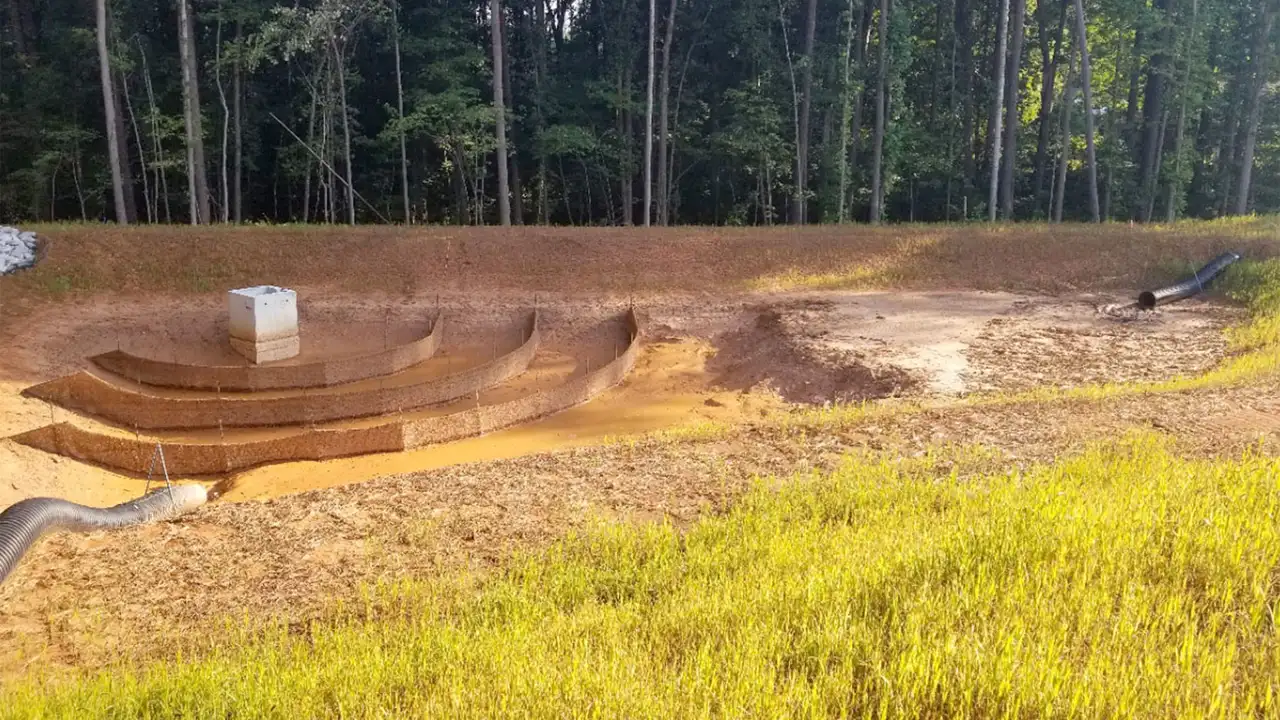
In the Piedmont area, the challenge arises when clay particles are suspended in stormwater, as they become difficult to remove. This is where the skimmer sediment basin is often used. Water is forced to pass through multiple rows to slow the water down before a floating skimmer drains only the cleanest water from the surface.
The Coastal Plain
Sandy soils are highly prone to erosion by both wind and water. Because the groundwater table is often just inches below the surface, digging deep sediment basins is impractical. Perimeter controls and silt fences are often used, along with wind erosion protection methods.
You can trust the Wynn Site Development team to consider how the area impacts erosion control methods.

Erosion Methods Used in North Carolina Sites
Several erosion methods are used on North Carolina sites. This includes temporary and permanent seeding. In this process, our team applies a fast-growing temporary grass to stabilize stockpiles or pause grading areas. There are also hydroseeding, mulching, and rolled erosion control products that can be used in the process.
Runoff and Conveyance Control
Sediment Retention Barriers
Surface Skimmers
Why WSD
Frequently Asked Questions

Contact Us Today for All of Your Erosion Control Services
Contact Wynn Site Development Today
Get a fast, reliable estimate from a team that delivers on time and on budget.
- 287+ Projects Completed
- On-Time Delivery
- Trusted by Developers
Simply fill out this form and one of our associates will be in touch.